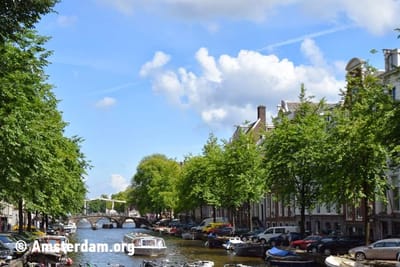
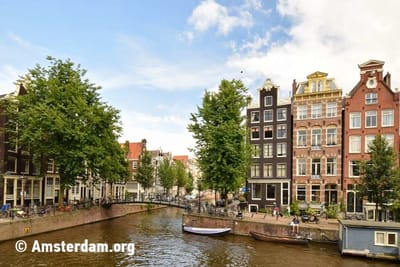
Amsterdam is world famous for its seventeenth-century canals and has more canals than Venice and more bridges than Paris.
Born in the Golden Age
The canal ring is no coincidence, but the result of one of the most ambitious city expansions Europe has ever seen.
A city bursting at the seams: at the start of the seventeenth century Amsterdam experienced its economic, political and cultural Golden Age, and the city grew so fast that a major expansion became unavoidable.
Five times as large: the city council drew up a plan to make Amsterdam five times larger. Construction of the canal ring began in 1613 and was carried out in several phases.
Older canals: the oldest surviving canals, such as the Oudezijds Voorburgwal and the Oudezijds Achterburgwal, date back to the fourteenth century and enclosed the medieval city centre.
A model for the world: the simple structure of the canal ring is regarded as a masterpiece of urban planning, hydraulic engineering and architecture, and served as a model worldwide until well into the nineteenth century.
Canal Architecture
What makes the canal ring unique in the world lies mainly in its layout and in the details of the façades.
A semicircle instead of a grid: most canal cities have a rectangular street pattern, but in Amsterdam the three main canals each consist of five slightly angled straight sections, which together form a semicircle around the old city centre. All radials converge on one point: the Dam.
Hoisting beams above the door: almost every canal house has a hoisting beam in its façade. The stairs inside are so narrow that furniture is still hoisted in through the windows today.
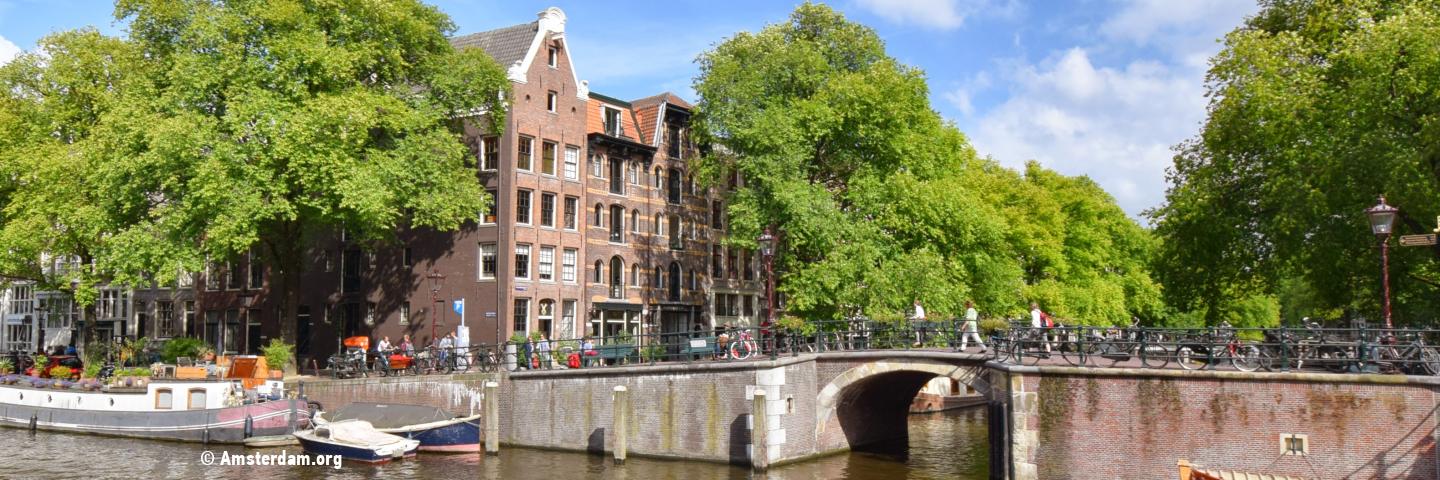
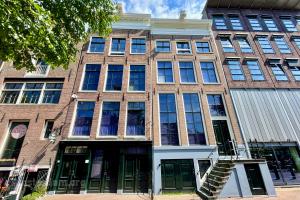
Forward-leaning façades: that is why many façades lean slightly forward, so that goods being hoisted up do not bump against the wall. This gives the canals their characteristic, slightly stooping appearance.
Gable stones as addresses: before house numbers were introduced, buildings were recognised by their gable stone, a symbolic name plate showing who lived there or which trade was practised. You will find many of them in the Jordaan in particular, and the Amsterdam Museum (temporarily closed for renovation) holds an extensive collection.
Green Along the Canals
The rows of trees and the hidden gardens make the canal ring one of the greenest historic city centres in Europe.
A European first: Amsterdam was the first city in Europe to plant trees on a large scale. Even before 1600, lime trees and later elms were planted on both sides of every newly dug canal.
More than just beautiful: the trees were not only decorative, they also reinforced the quay walls and later provided cleaner air in the densely built city.
Hidden back gardens: behind the houses lie deep gardens, because only half of the plots between the canals could be built on. They are oases of calm where you briefly forget that you are in a world city.
Take a look yourself: these gardens usually stay hidden behind the façades, but during the Open Garden Days in June dozens of canal houses open their doors to visitors.
The Function of the Canals
The canals were never purely decorative; over the centuries they played a changing role in the life of the city.
Creating land: the network of waterways was originally dug mainly to create dry land. The soil released during digging was used to raise the ground or build defensive ramparts.
Fire water, sewer and rubbish dump: for centuries the canals also served as a source of water for fighting fires and as a drain, functions that thanks to the modern sewer system are fortunately a thing of the past.
The motorways of the past: the canals were the city's main transport routes, carrying both goods and people, much faster than through the narrow streets.
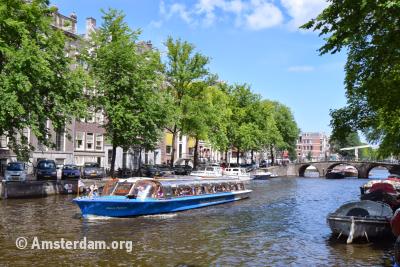
Mainly for tourists today: the water is still very busy, nowadays mostly with canal cruise boats, sloops and the houseboats that help define the cityscape.
Cultural World Heritage
Since 1 August 2010, the main canals have officially been on the UNESCO World Heritage List.
Why the recognition: the canal ring was given this status because of its unique street pattern, its varied historic architecture and the long rows of trees along the centuries-old canals.
Which area: the protected area roughly stretches between the Brouwersgracht and the river Amstel, including the Singel, the Herengracht, the Keizersgracht and the Prinsengracht.
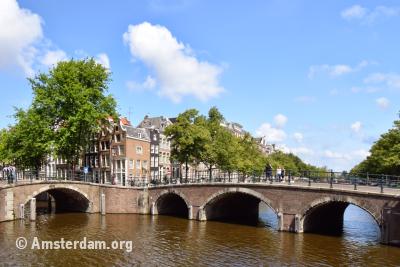
In numbers: it covers an area of 160 hectares with 7,737 listed monuments. Together, the main canals within the World Heritage site are a good 12.5 kilometres long and have 80 bridges.
The most expensive addresses: the bend of the Herengracht between the Leidsestraat and the Vijzelstraat is known as the Golden Bend, where the richest merchants had their double-width town palaces built.
The Growth of Amsterdam
The canal ring was built in two major phases, separated by the Leidsegracht, and each part has its own character.
The western canal ring: this part was built first, between 1613 and 1625, and extends to the Brouwersgracht. Here the Golden Age mixes with the Middle Ages, which makes for particularly atmospheric streets.
Popular with residents and visitors: this western part in particular, with the Jordaan and the Anne Frank House around the corner, is considered the most representative of Amsterdam.
The southern canal ring: its construction took considerably longer. The ring was originally meant to continue east of the Amstel, but the Nieuwe Herengracht remained the only completed section. To the south, this part borders the Spiegelkwartier, known for its antique shops and galleries.
View of the Amstel: on the east side you look out from the quay over the river, with the H'ART Museum and the picturesque Magere Brug, a wooden drawbridge from around 1670.
Festivals on the Water
The canals are not just for looking at; several times a year they turn into an open-air stage.
King's Day: during King's Day on 27 April the canals turn into one big orange festival ground, with hundreds of boats full of revellers.
Canal Parade: during the Canal Parade of Pride Amsterdam in August the canals turn pink, with a world-famous boat parade. A party for everyone, whether you are on a boat or standing on the quay.
Canal Festival: also in August, the Grachtenfestival takes place, with classical concerts played from pontoons and the canals. Summer evenings hardly get any better.
Skating on the ice: in harsh winters the Keizersgracht is closed to shipping and flushing is stopped so that the water can freeze. Only after several days of hard frost is the ice thick enough. Because winters are milder these days, this rarely happens, so if you experience it you are lucky indeed.
Experiencing the Canals
With more than three million passengers a year, the canal cruise is the city's top attraction, but there are more ways to discover the canals.
Classic cruise: comfortable canal cruise boats sail past famous merchants' houses, centuries-old city towers and hundreds of bridges and locks. A cruise usually takes about an hour.
On the water at night: there are also cruises after sunset, past atmospherically lit bridges and façades. Many visitors find this the most beautiful way to see the canal ring.
Hop on hop off: various water bus services stop at popular sights, museums and attractions, which is handy if you want to combine getting around with sightseeing.
A look inside: at the Canal Museum multimedia exhibitions show how people used to live in the canal ring. During Open Monuments Day buildings that are normally closed also open their doors.
Free Cycling and Walking Routes
You can see the most beautiful side of the canals simply from the quay, and that costs nothing at all.
Route through the old city centre: a walk through the medieval city centre, with the oldest canals and buildings dating from 1275 to 1600.
Western canal ring route: along the first part of the ring, built between 1600 and 1660, with the most atmospheric alleys in the city.
A few tips will make your visit to the canals a lot more pleasant.
The best light: early in the morning and around sunset the canals are at their most photogenic and also much quieter than in the middle of the day.
Book ahead: for the popular canal cruises it is wise to book online, especially in high season and for evening cruises.
Watch out for cyclists: the quays are narrow and busy. Look carefully before you stop for a photo, because cyclists often have little room to swerve.
Sail yourself: renting a boat is allowed, but keep to the navigation rules, the clearance height of the bridges and the required vignettes in the centre.






 Display on Map