The seven stops (1660 to 1700)
From the story behind the canal ring to the most celebrated view in the city.

The Museum Grachtenhuis uses models and projections in a small canal house to explain how the canal ring came about. A good primer for the rest of the route.- Singel 610 (1883)
The Flower Market is the only floating flower market in the world, its stalls on permanently moored barges. These days it sells mostly bulbs and souvenirs. - The Golden Bend (from 1664)
On the Herengracht between the Leidsestraat and the Vijzelstraat stand the stateliest canal houses in Amsterdam. The Republic's wealthiest merchants and mayors lived here, in houses two plots wide. - Keizersgracht 606-608 (1731)
De Zwaan is the tallest pair of matching neck gables in the city, two houses designed as one symmetrical whole. - Reguliersgracht 39
A pronounced example of a forward-leaning house. That is not subsidence but design: it kept hoisted goods clear of the façade on their way to the attic. - Corner of Reguliersgracht and Herengracht
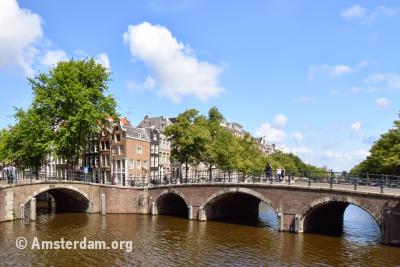
Look carefully from here and you can see fifteen bridges at once, the best-known view in the canal ring. Stand on the bridge and look along the length of the Reguliersgracht. After dark they are all lit. - >
The Magere Brug over the Amstel is the most famous drawbridge in the city. A bridge has stood on this spot since around 1670; the present one dates from 1934 and is still operated by hand. In the evening it is lit by hundreds of small lamps.