Amsterdam Central Station: arrival, connections and facilities
For almost every visitor, Amsterdam begins here: in a nineteenth-century palace of a station through which a quarter of a million people pass every day.
The hub of the city
Amsterdam Centraal is central not only in name but as the pivot of the city's public transport.
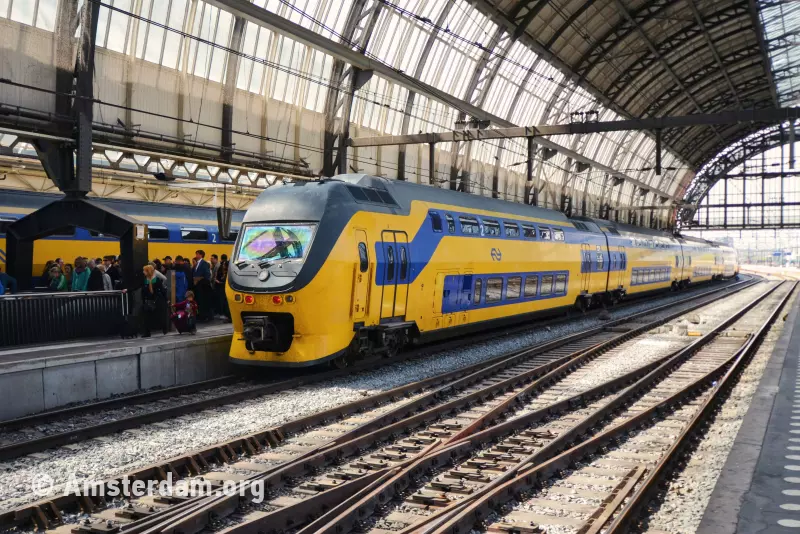
Eleven platforms, fifteen tracks: trains run from here to virtually every Dutch city, plus international services to Brussels, Paris, Berlin and London.
A departure point on the water: the jetties for canal cruises through the canals sit on both sides of the station.
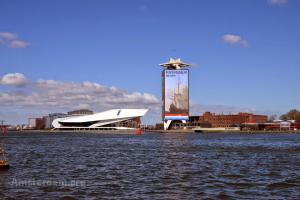
The back is also a front: on the IJ side you will find the ferries, the bicycle garage and the view across the water. Many visitors do not realise you can walk straight through the station and out the other side.
The building itself
The station is a sight in its own right, and has shaped the city's face from the water for over a century.
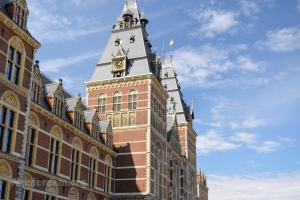
Opened in 1889: the station was designed by Pierre Cuypers, the same architect who drew up the Rijksmuseum. The two buildings look strikingly alike, with their red brick and neo-Gothic towers.
Built on water: three artificial islands were created in the IJ for its construction, resting on nearly nine thousand wooden piles. In doing so, however, the station cut the city off from its open harbour.
Controversial at the time: many Amsterdammers opposed the location precisely because it took away the view of the IJ. That argument rumbled on for years.
Two dials: the left tower carries a clock, the right a wind vane showing the current wind direction. A relic of the days when skippers wanted to know.
A listed monument: after a renovation that ran for more than fifteen years, the station gained a new passageway, a second entrance on the IJ side and a fully restored Royal Waiting Room.
From Schiphol to Central Station
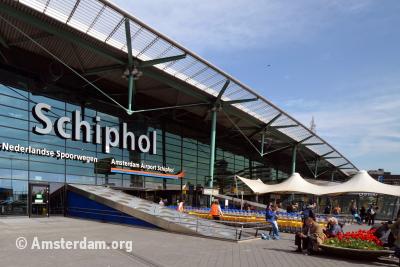
The direct rail link with Schiphol is by far the quickest and cheapest way into the city.
Journey time: around 15 to 20 minutes, depending on whether you take an Intercity or a Sprinter.
What it costs: a single second-class ticket is around €6. Children aged 4 to 11 travel cheaply on a Railrunner, and under-4s travel free.
How often: up to eight trains an hour during the day and roughly one an hour overnight, so even a late landing gets you into town. Check the current timetable.
Pay with your bank card: the simplest option is to tap in and out with a contactless card or phone using OVpay. Do not forget to tap out on arrival.
Or buy in advance: tickets are available from the yellow machines, at the ticket desk or online here.
Facilities in the station
The station has become a small shopping centre where you can sort out almost anything before heading into the city.
Tickets and information: dozens of machines for domestic train journeys, plus information desks at the entrances. International tickets are sold at the Service Center.
Somewhere for your bags: the luggage lockers are accessible 24 hours a day, seven days a week. For something cheaper there is alternative luggage storage five minutes' walk away.
Eating and shopping: a supermarket, several cafés, fast food outlets, a bookshop and a bureau de change, all within the station passageway.
By bike: an enormous underground bicycle garage that is free for the first 24 hours, along with a repair shop and bike hire.
By car: several car parks sit close to the station, though that is an expensive solution in Amsterdam.
Lost property: the desk for this is beside the luggage lockers.
What lies around the station
You do not have to walk far before you come across something worth seeing.
Tourist information: opposite the main entrance, in the white wooden coffee house, sits the I Amsterdam Visitor Centre, with the information office of transport operator GVB to its left.
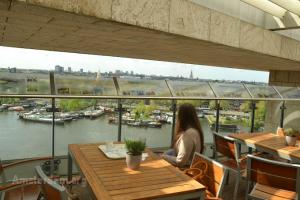
A view without a ticket: the Public Library is five minutes' walk east and has a roof terrace with one of the finest panoramas over the city. Free to enter.
Free ferry rides: behind the station the ferries depart for Amsterdam Noord, where the A'DAM Tower and the NDSM wharf await.
Shopping starts here: the Damrak runs straight from the station to Dam Square, and the Nieuwendijk and Haarlemmerstraat are round the corner.
Brown cafés: the Zeedijk begins two minutes' walk away and has some of the oldest bars in the city. See our page on food and drink.
Hotels by the station
Several hotels sit so close that you can wheel your suitcase straight to the door.
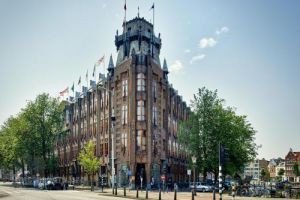
Budget: the Ibis Amsterdam Centre is the nearest hotel of all, standing on the station island itself.
Mind the noise: right on Stationsplein it stays busy until late. Ask for a room at the back if you are a light sleeper.
Or stay further out: in districts such as Noord or Oost you pay considerably less while a ferry or metro brings you back in a quarter of an hour. See our tips for visitors.
A few things you are better off knowing beforehand than afterwards.
Watch out for pickpockets: the station and Stationsplein are among the places in the Netherlands where most thefts occur. Carry your bag in front of you and keep your phone out of your back pocket.
Shield the keypad: cover your PIN when buying a ticket and put your wallet away immediately.
Allow time: when departing, add a quarter of an hour for the walk through the passageway and the transfer to the platform.
Do not forget to tap out: on trains, trams and metros you tap both in and out. Without a tap-out you are charged a penalty or the maximum fare.
The night buses: once trams and metros stop around 00:30, the GVB night buses depart from here. See our pages on public transport and nightlife.
Buy nothing in the street: second-hand bikes and tickets offered around the station are almost always stolen or invalid.






 Display on Map