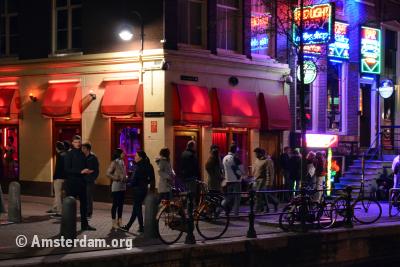
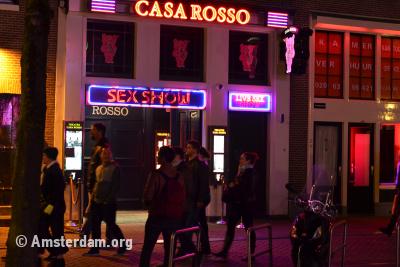
De Wallen is the best-known red light district in the western world, and at the same time the oldest and one of the loveliest parts of Amsterdam.
Two faces in one neighbourhood
Anyone who goes purely on the reputation misses what this quarter is really about.
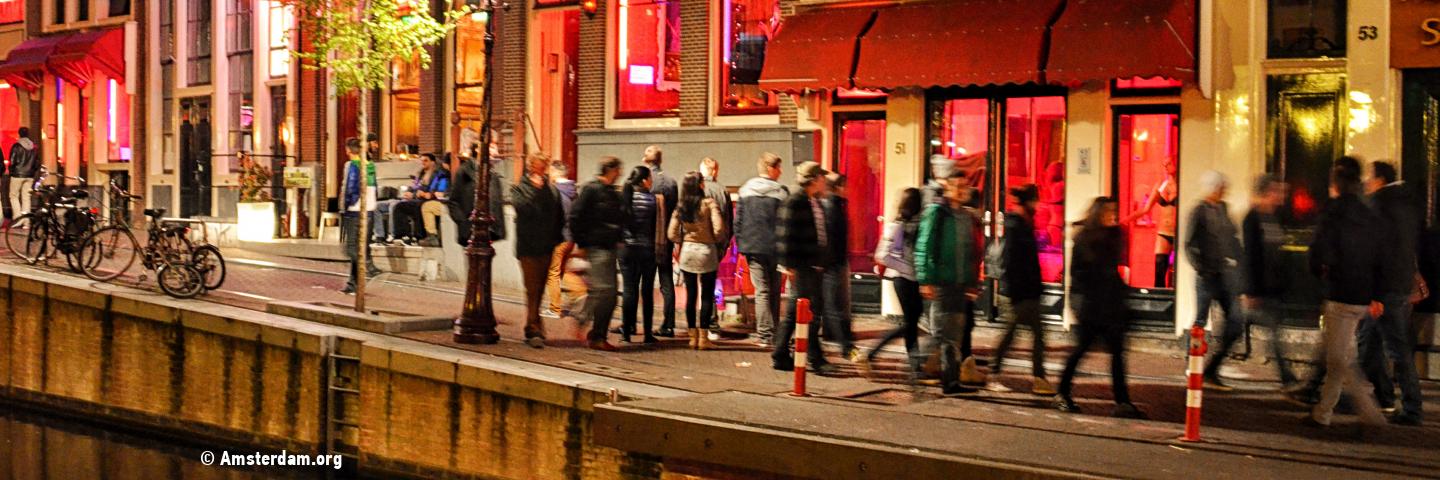
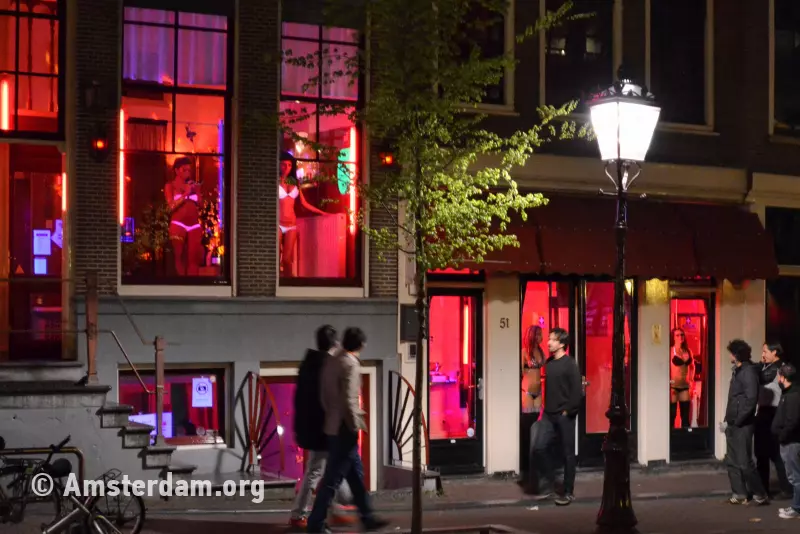
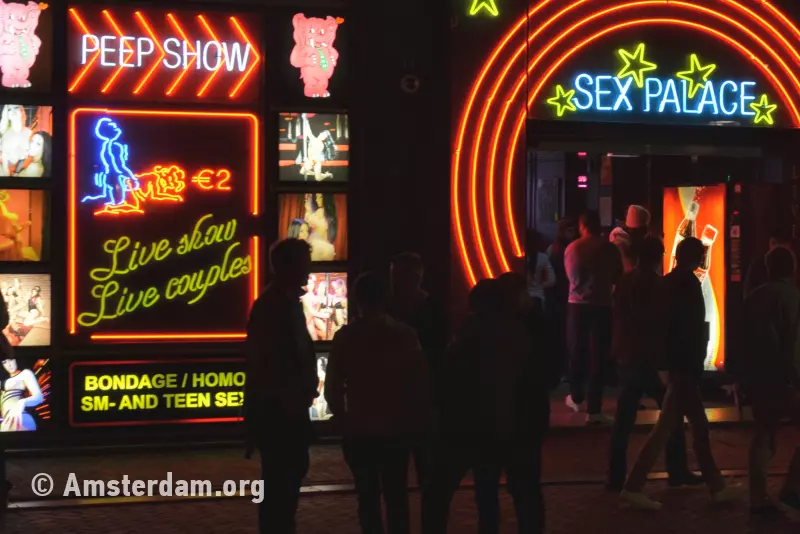
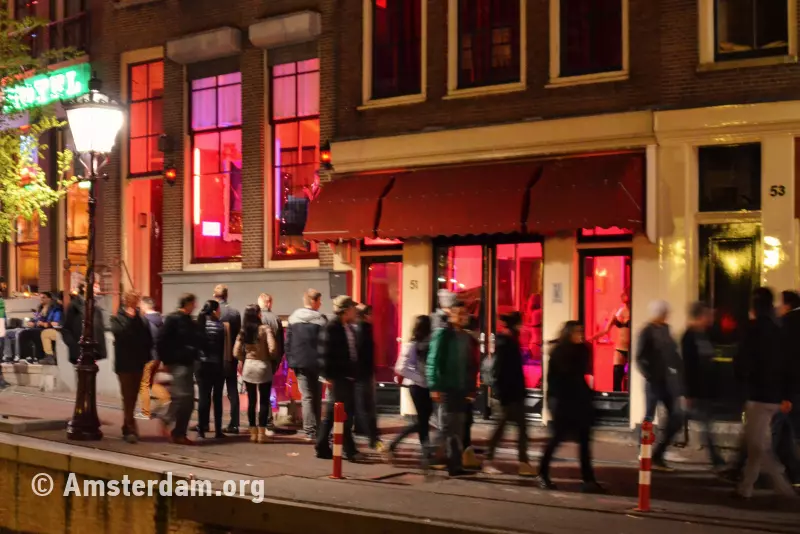
The red glow: the district owes its name to the red neon of the windows, which reflects atmospherically on the water of the canals after dark. It is one of the city's best-known free open-air attractions.
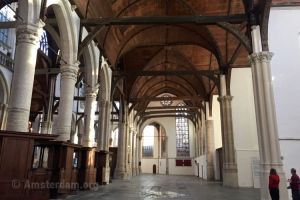
The oldest part of Amsterdam: behind that image lies the medieval core of the city, with winding cobbled alleys, leaning gables and the Gothic Oude Kerk from the thirteenth century at its heart.
An ordinary residential area: hundreds of Amsterdammers live among the windows and bars, with children who go to school here. That also explains why the city acts firmly against antisocial behaviour.
More cafés and shops all the time: classic brown bars, good restaurants and stylish shops have gradually given the area a different character in recent years.
Rules you have to follow
The city has intervened considerably in recent years to cut down on nuisance. These rules apply to everyone, residents included.
No photography: never take photos or video of the sex workers behind the windows. It is strictly forbidden and actively enforced, both by the women themselves and by security staff.
No tours past the windows: organised tours that lead along the windows have been banned since 2020. Tours focusing on the history of the neighbourhood are still permitted.
No smoking cannabis in the street: since 2023 a street smoking ban has applied across the whole Red Light District area, as well as on Dam Square, the Damrak and the Nieuwmarkt, with a 100-euro fine. It is still allowed on coffeeshop terraces.
No alcohol in the street: a street drinking ban has applied in the same area for some time, and shops may not sell alcohol from 16:00 on Thursdays to Sundays.
Earlier closing times: at weekends the windows close at 03:00 instead of 06:00 and bars at 02:00, with no new guests admitted after 01:00.
Behave yourself: shouting, public urination and harassing residents or sex workers carry fines that quickly run into the hundreds of euros.
Live shows
For those who want more than a look around, the area has a few well-known addresses for erotic shows.
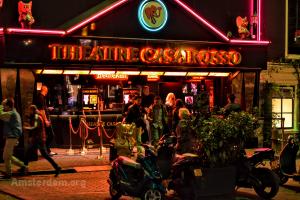
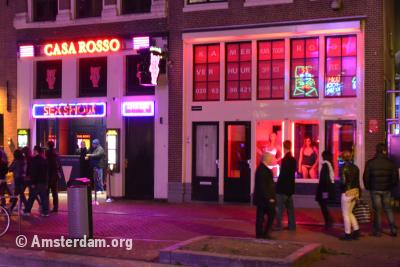
Casa Rosso
Casa Rosso is one of the best-known erotic theatres in Amsterdam and is located in the heart of De Wallen, the city’s historic red-light district. The theatre has been located on the Oudezijds ...
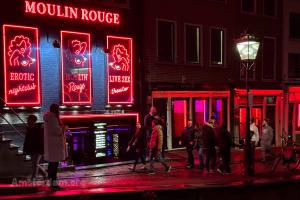
Moulin Rouge is a well-known erotic theatre in the heart of De Wallen, the famous Red Light District of Amsterdam. For many years, this historic canal house has hosted live erotic shows ...
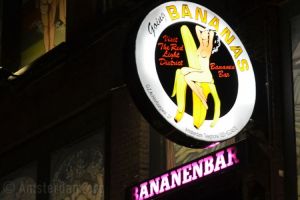
The Bananen Bar is a well-known erotic entertainment venue on the Oudezijds Achterburgwal, right in the heart of De Wallen, the famous Red Light District of Amsterdam. The venue stands out for ...
If you want to understand the area properly, these places tell the story behind the windows.
Red Light Secrets, Museum of Prostitution
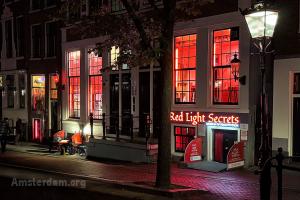
Want to take a peek inside a brothel room without actually visiting a prostitute? Dive into the hidden world of Amsterdam's prostitution at Red Light Secrets, the Prostitution Museum in ...
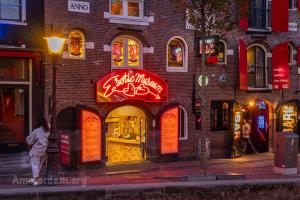
Situated in an old warehouse right in the heart of the Red Light District, the Erotic Museum invites you on a journey of discovery through Amsterdam's erotically charged sides. With red neon ...
Discover the famous AmsterdamRed Light District, better known as the Wallen, in a respectful and safe manner with our guided Red Light District Tour. This tour offers a unique insight into the ...
The area around the Wallen offers considerably more than just the famous windows.
The Warmoesstraat: one of the oldest streets in the city, with sex shops, gay bars and darkrooms alongside perfectly ordinary cafés and places to eat.
The Zeedijk and Chinatown: this street leads you straight into Amsterdam's Asian quarter, with the striking Fo Guang Shan He Hua temple and dozens of Chinese, Thai and Vietnamese restaurants.
The Nieuwmarkt: the square with the medieval Waag at its centre is one of the most convivial spots for a terrace in the city centre, with an organic market on Saturdays.
Within walking distance:Waterlooplein with its flea market and Dam Square are both just minutes away.
Tips for your visit
A few practical pointers will make sure your visit is a good experience.
Go in the evening: by day the area is mostly just an ordinary, handsome old quarter. Its distinctive atmosphere only picks up after dark, and fades again around 03:00 when everything closes.
Not your first stop: start your city break somewhere else, because the Wallen give you a distorted impression of Amsterdam and of the Netherlands.
Do not walk alone: visit in a pair or a small group, and you will draw far less unwanted attention.
Buy nothing from street dealers: what they offer is illegal, often fake and sometimes downright dangerous. The same goes for second-hand bikes offered to you in the street.
Watch out for pickpockets: the crowds in the narrow alleys are exactly where they operate.
Safer than it looks: despite its rough appearance the area is safe in practice, with a permanent police and security presence.
Location
Amsterdam has three red light areas, of which De Wallen is by far the largest and best known.
The main area: east of the Damrak, bounded by the Warmoesstraat, the Zeedijk, the Nieuwmarkt and neighbouring Chinatown. The district measures roughly 300 by 250 metres.
The main streets: the Oudezijds Voorburgwal and the Oudezijds Achterburgwal are the two canals along which most of the windows are found.
The Netherlands has long chosen regulation over prohibition, and that explains why the Wallen are the way they are.
Legal since 2000: the ban on brothels was lifted in October 2000, making sex work an ordinary occupation. Sex workers have paid tax like anyone else ever since.
Regulated and monitored: operators need a licence, and the authorities oversee safe working conditions and access to healthcare.
Minimum age: sex workers in Amsterdam must be at least 21, stricter than the national rule of 18.
The other side: despite regulation, trafficking and exploitation remain a persistent problem, and that is a major reason behind current city policy.
Finding out more
If you want to look past the surface, reliable information is available in the neighbourhood itself.
The Prostitution Information Centre: the P.I.C. at Enge Kerksteeg 3 was founded by a former sex worker and gives honest, factual explanations about the work and the area. You can walk in without an appointment.
Tours with substance: various guides offer walks covering the history and the social side of the district rather than simply parading past the windows.
Museums in the area: the prostitution museum Red Light Secrets literally lets you sit behind a window and shows the work from the sex worker's own perspective.

 Buy tickets in advance now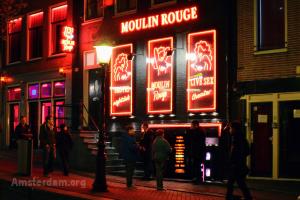
 Display on Map