
The Waag - Monument
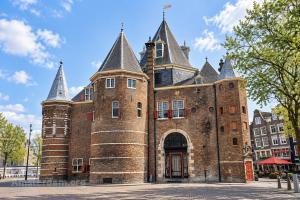
The Waag is a striking historic building in the middle of Nieuwmarkt and, with its heavy walls and towers, almost resembles a small medieval castle.
Today, it houses a restaurant where you can enjoy a delicious lunch or dinner.
Discover De Waag on Nieuwmarkt
- City gate: De Waag dates from 1488 and was originally built as the Sint Antoniespoort, forming part of the city's defences.
- Medieval landmark: It is the oldest non-religious building in the city and has served, among other things, as a weighing house, guildhall, anatomical theatre and museum.
- Guild emblems: Above several entrances you can still see symbols of Amsterdam's guilds, including those of masons, painters, shoemakers and surgeons.
- From city gate to weighing house: From 1617, trade goods were officially weighed here after Amsterdam had rapidly developed into an important trading centre.
- Theatrum Anatomicum: At the top of the building is a historic anatomical theatre dating from 1691. Its wooden domed ceiling is decorated with 87 family coats of arms belonging to Amsterdam surgeons.
- Rembrandt: The famous 1632 painting The Anatomy Lesson of Dr Nicolaes Tulp by Rembrandt depicts a dissection by the Amsterdam surgeons' guild that took place in De Waag.
Practical information
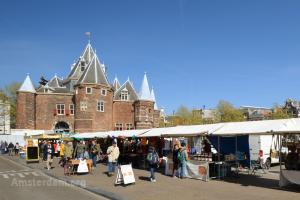
De Waag stands in the middle of Nieuwmarkt, making it easy to include in a walk through Amsterdam's historic centre.
- Lively surroundings:
- Interior: The historic Theatrum Anatomicum is not freely accessible and can only be visited during special openings such as Open Monument Day.
Furthermore The Waag is near the following sights: Fo Guang Shan He Hua Tempel (±100 m), Red Light Secrets, Museum of Prostitution (±125 m), Red Light District Tour (±175 m), Oude Kerk (Old Church) (±225 m) & Hash, Marihuana & Hemp Museum (±250 m).
For information
Nieuwmarkt 4, Amsterdam
web. Website
 Display The Waag