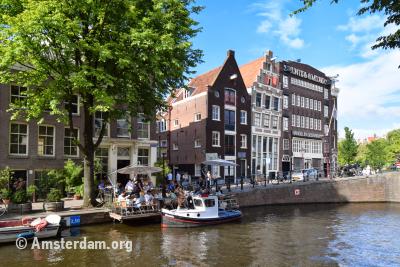
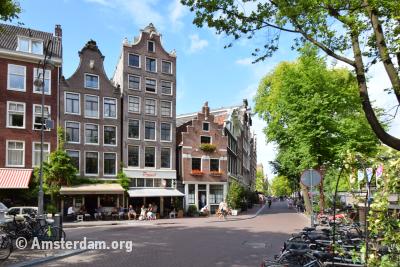
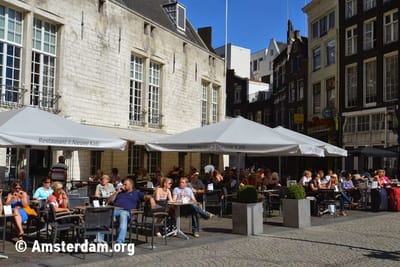
With more than a thousand restaurants and virtually every world cuisine within cycling distance, you can eat as well as you like in Amsterdam, at any price point.
Dutch cuisine
Dutch cooking is modest in range, and that is precisely what makes it recognisable and hearty.
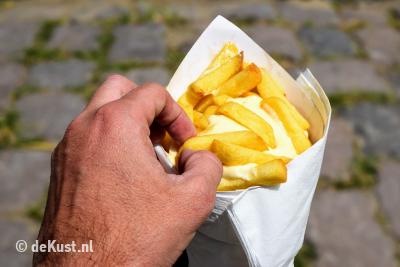
Classic and filling: think of a thick pea soup, stamppot with smoked sausage, meat croquettes and chunky chips with proper mayonnaise, dishes that come into their own in winter.
Dutch sweets: pancakes the size of the plate, poffertjes dusted with icing sugar, and a warm stroopwafel straight off the griddle at the market.
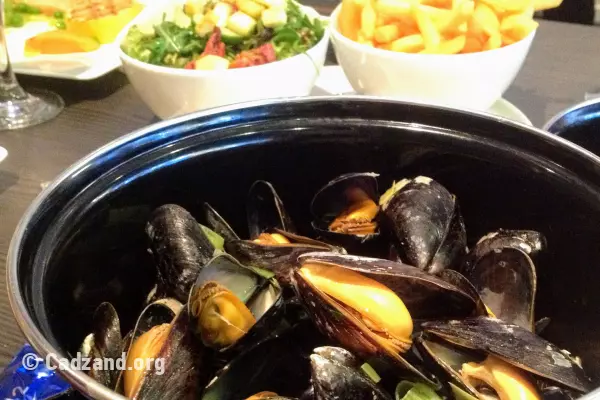
Fresh from the sea: herring, mussels, prawns and kibbeling are available all year round. Dutch new herring is eaten at the stall, preferably with chopped onion.
The Indonesian influence: thanks to the colonial past, nasi goreng, satay sauce and the elaborate rice table are as familiar on the menu as the strictly Dutch dishes.
Cheese as an export:Gouda, Edam and mature farmhouse cheese are best tasted at a cheese shop or at one of the city's markets, where you are nearly always offered a sample.
A city full of world cuisines
Amsterdam is a melting pot, and you taste it on practically every street corner.
Over a thousand restaurants: from Argentinian and Thai to Ethiopian and Japanese, nearly every cuisine is represented, in every price bracket from fast food to haute cuisine.
Surinamese as a local favourite: a roti or a pom sandwich is a regular fixture for many Amsterdammers. The best addresses are in De Pijp and in Zuidoost.
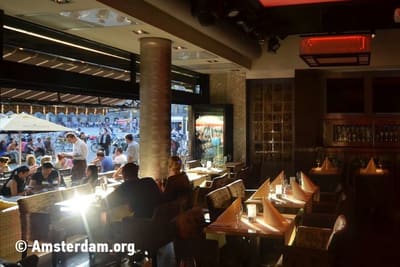
Stars and bistros: the city has several Michelin-starred restaurants, but also countless unassuming neighbourhood places where you eat superbly for a fraction of the price.
Vegetarian and vegan: plant-based eating is entirely normal here. Almost every restaurant has good vegetarian options and there are dozens of fully vegan places.
The classic categories: alongside these you will find pancake houses, steakhouses, fish restaurants and the familiar brown cafés with a simple menu.
Where to eat
Every neighbourhood has its own character, and that largely determines what ends up on the table.
The Jordaan: narrow streets full of small restaurants and brown cafés, with the Egelantiersgracht and the area around the Noordermarkt making atmospheric spots for a long evening in the Jordaan.
De Pijp: the most varied eating quarter in the city, around the Albert Cuyp market, with Surinamese, Turkish, Syrian and Asian alongside fashionable coffee bars.
Haarlemmerstraat and Haarlemmerdijk: the Haarlemmerstraat and the Haarlemmerdijk were voted the finest shopping street in the Netherlands for years running, with a high concentration of good lunch spots and delicatessens.
The Zeedijk and Chinatown: in Chinatown you find Chinese, Thai and Vietnamese cooking, often plainly furnished but excellent in quality, a stone's throw from the Nieuwmarkt.
Further from the centre: in Amsterdam Noord (around the NDSM wharf) and on IJburg in Amsterdam Oost you find spacious, modern places by the water, frequented mainly by locals.
Eating out in Amsterdam need not break your budget, provided you know a few things.
Do not take breakfast at your hotel: most hotels soon charge 10 to 20 euros a head for breakfast. Book your room without it and have breakfast in the restaurant of the HEMA on the Nieuwendijk, where a croissant and coffee start at around 3 euros.
Eat where the locals eat: a herring roll from a stall, a cone of chips, a Surinamese sandwich or a simple rice table are cheaper and usually better than the tourist places around Dam Square and the Damrak.
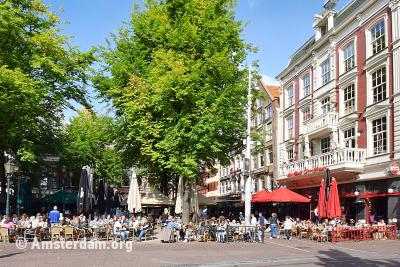
One street further already helps: the terraces directly on the big squares are noticeably dearer than the cafés a few streets away, where you often sit more comfortably too.
Take the dish of the day: many neighbourhood restaurants offer a daily menu or a set three-course menu that works out considerably cheaper than ordering à la carte.
At the market: at the Albert Cuyp or the Ten Kate Markt you can lunch for a few euros on fresh cheese, nuts, fish or a warm stroopwafel.
Tap water is free: the water from the tap is of excellent quality, so do ask for a carafe rather than ordering bottled.
Anyone after one truly Amsterdam experience should head for a brown café.
Where the name comes from: the brown of the walls is the legacy of decades of cigarette smoke, though some are simply painted brown. Smoking has not been permitted there since 2008.
The atmosphere: nostalgic and unpolished, with wooden tables that sometimes still carry a rug as a tablecloth, curiosities on the walls and a beer topped with two fingers of foam.
Borrel snacks: the borrel calls for bitterballen (small deep-fried meat croquettes), cubes of cheese with strong mustard and slices of liver sausage. Many cafés bring a dish free with your drink.
Try a jenever: the Dutch forerunner of gin is served in a tulip-shaped glass filled to the brim, with the first sip taken standing and without hands. There is more on this at House of Bols.
Beer up close: discover how Dutch beer is brewed at the Heineken Experience in De Pijp.
Snacks and street food
Some Dutch treats are simply eaten standing in the street, and that is part of the fun.
Chips with everything: at the snack bar you order chips with mayonnaise, or a patatje oorlog with peanut sauce, mayonnaise and raw onion.
Out of the wall: at the famous wall vending machines you pull a hot croquette or frikandel from a hatch for a couple of euros. A quintessentially Amsterdam ritual worth doing at least once.
Herring the Dutch way: at the fish stall you get your herring with onion, cut into pieces or whole by the tail. Kibbeling and smoked eel are the milder alternatives.
Sweet classics: a fresh stroopwafel at the market, an oliebol around New Year or poffertjes with icing sugar and a knob of butter.
Watch for traps: the "authentically Dutch" waffle shops on the Damrak and the Rokin are aimed squarely at tourists. At the market or a proper bakery you eat better for less.
Practical information
Dutch eating habits differ on a few points from what you may be used to.
Dining early: the Dutch eat their evening meal between roughly 17:00 and 20:00, far earlier than in southern Europe. Many restaurant kitchens close by 21:30 or 22:00.
Lunch and breakfast: breakfast is served until about 10:00 in hotels and eateries, and lunch is generally taken between 12:00 and 14:00.
Book ahead: at popular restaurants a weekend reservation is all but essential. Check details and opening hours at TheFork.nl or Eet.nu.
Tipping is optional: service is included in the price. If you are happy, five to ten per cent or rounding up is more than enough.
Card payment is the norm: many places no longer take cash, so bring a contactless bank card. American Express is far from universally accepted.
Easy to reach: most eating quarters are within walking distance or quickly reached by public transport.